Yes, Green Lives matter. And yes, the North Carolina DEQ has many wonderful and talented people. But DEQ employees are provided salaries and benefits, and as public employees they should expect scrutiny, transparency, and public acountability. State agency data and documents spanning nearly two decades for Chemours (DuPont) Fayetteville and GenX, PFAS chemicals point to the North Carolina DEQ pollution police department's outdated systems, long-standing culture of secrecy and concealment, resistance to modernization, and the surprising failures of the DEQ Division of Air Quality's inspection and permit programs.
The data and documents for Chemours (DuPont) Fayetteville suggest that the implementation of the Title V inspection and permit program by the DEQ Division of Air Quality may do more harm than good for the public. Since at least 2005, the DEQ Division of Air Quality had detailed information and reports describing how GenX and numerous other PFAS chemicals were being discharged into the water and air from DuPont Fayetteville Works. The evidence points to how multiple DEQ officials knew, or should have known, that GenX and PFAS chemicals were being released into the Cape Fear River. Surprisingly, the DEQ Division of Air Quality officials in Fayetteville and Raleigh never shared this important information with communities down the Cape Fear River in southeastern North Carolina.
Equally surprising, the documents suggest that officials in the DEQ Division of Air Quality never shared the important information about discharges of GenX and PFAS chemicals from Chemours (DuPont) Fayetteville with the Science Advisory Board, the appropriate U.S. EPA officials, or even the other divisions in DEQ. If piled all together, the DEQ Division of Air Quality paperwork for the Chemours (DuPont) Fayetteville environmental permits over the past two decades might overflow a large conference room. Yet despite the mountain of state agency paperwork, and the large number of state government man-hours over nearly two decades, the most important DEQ information about Chemours (DuPont) Fayetteville has continued to remain hidden from scientists and the impacted communities down the Cape Fear River like the proverbial needle in a haystack.
What about the DEQ Title V money ... $$$ ... ? Unlike state employees in other parts of NC DEQ, most of the engineers in the DEQ Division of Air Quality have lifetime employment regardless of state budget cuts or agency layoffs. Why? Because most of their funding comes from the companies that discharge the greatest quantities of pollutants into North Carolina's air. The companies, including Chemours, Duke Energy, and DuPont (prior to 2015) make annual payments under a "fee and tax system." Unless there is a successfull effort to lobby the U.S. Congress for a change in the fee and tax system, most of the engineers in the DEQ Division of Air Quality have jobs for life. As a result, it should not surprise the citizens living in impacted communities down the Cape Fear River to hear the companies say, "we are working closely with NC DEQ." Yes they are! The data and evidence for Chemours (DuPont) Fayetteville over the past 15 years suggests that the DEQ's implementation of the Title V inspection and permit program may have evolved in key respects into essentially an industry-funded, electronic paperwork-generating, state government jobs program for the Raleigh area. Was that the intent when the U.S. Congress included the Title V permit program as part of the Clean Air Act Amendments of 1990?
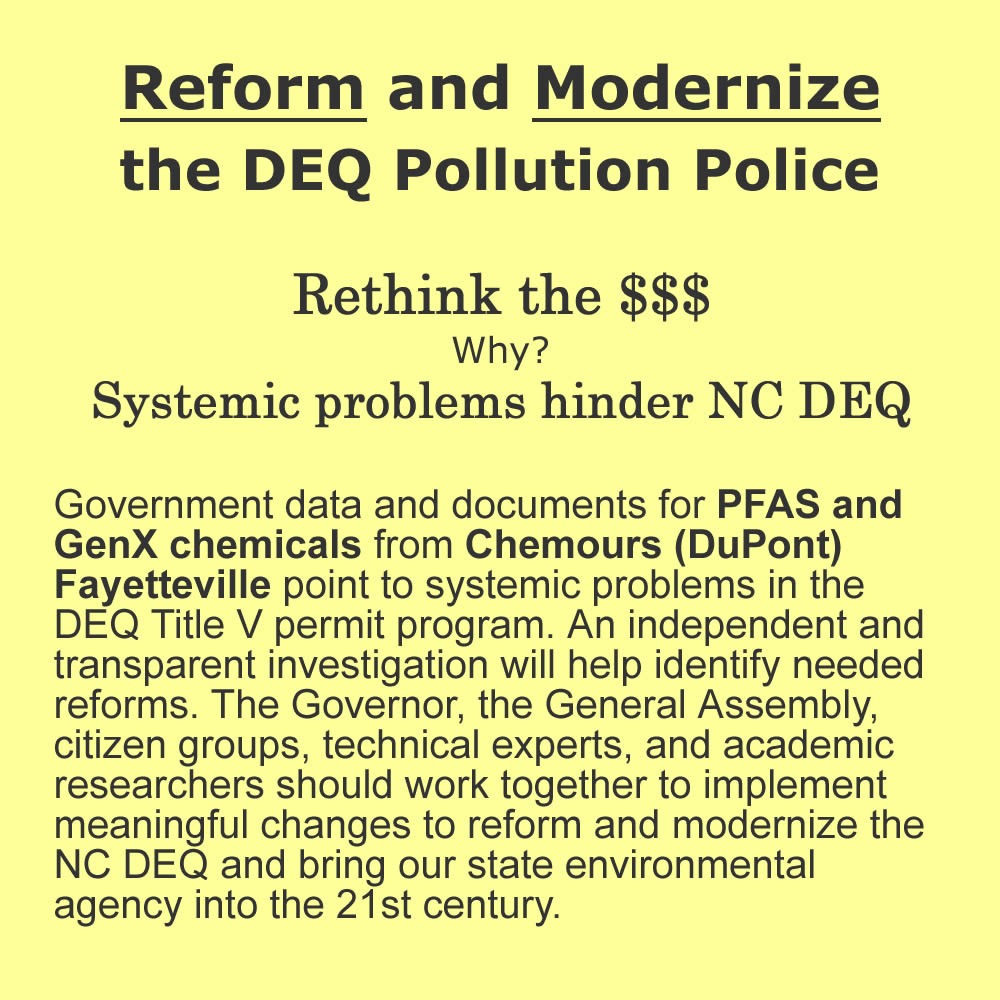
The public did not become aware of the GenX and PFAS chemical discharges into the Cape Fear River until investigative news reports in 2017. The evidence and documents point to surprising failures in the DEQ Division of Air Quality inspection and permit programs over a period of more than 15 years. An independent and transparent investigation will help identify how and why the DEQ Title V inspection and permit program failed and suggest reforms needed to prevent this from ever happening again. The Governor, the General Assembly, the Attorney General, citizen oversight groups, technical experts, and academic researchers should work together to implement significant and meaningful changes to reform and modernize the NC DEQ and bring our state environmental agency into the 21st century.